Audit Supplier Loading at Origin with 3D Simulation
July 27, 2026 4 min read
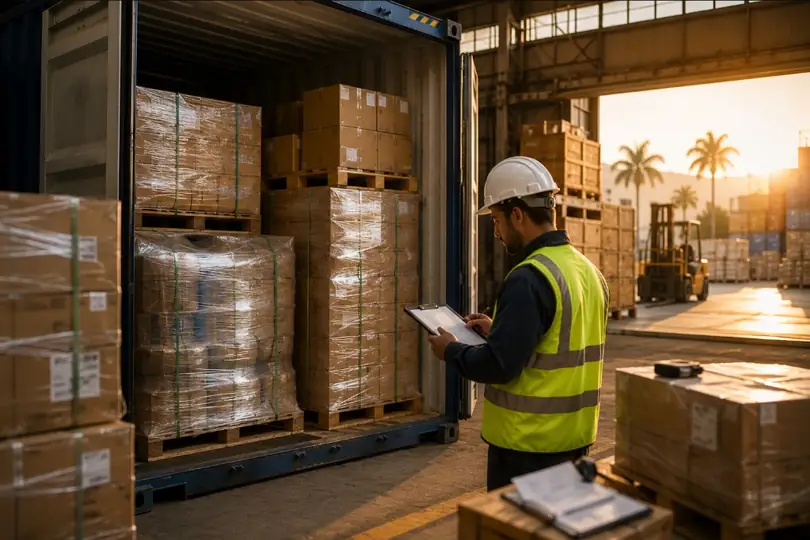
In international trade, especially when importing from Asia or Latin America, there is a critical moment when the buyer temporarily loses control of their investment: the loading process at the supplier’s factory.
Every import manager has experienced it: after months of negotiation and production, the manufacturer sends photos of the closed container and announces that “10% of the cargo could not be loaded because there was not enough space.”
The result is an immediate headache: paid cargo remains stored at origin, deliveries to customers are delayed, and an unplanned consolidated (LCL) shipment must be negotiated in a hurry.
This article explains how to move from a reactive approach to a pre-audit system using 3D simulations and clear digital instructions.
1. The Three Most Common Supplier Loading Mistakes
When you leave the decision about how to load the container entirely to the manufacturer’s team, three recurring problems arise:
- Loading for convenience: origin operators tend to load cargo in the quickest and easiest way for their team, not in the way that uses space most efficiently.
- Ignoring complex load combinations: when an order includes cartons of different dimensions, drums, or long tubes, suppliers often place them intuitively, creating major “air pockets” at the top and rear of the container.
- Incorrect pallet rotation: pallets are often loaded in one direction only—for example, lengthwise—out of habit, wasting the crucial side clearance that could fit an additional row.
2. The Digital Loading Standard: Communication Without Language Barriers
One of the largest obstacles in managing international suppliers is the language and cultural barrier. Sending long emails in English explaining “put type A cartons at the back and type B cartons on top” often leads to misunderstandings.
From a text specification to an interactive 3D URL
The most effective way to audit and direct remote stowage is to send a visual, interactive standard.
When an import department designs a loading plan in SendContainer, it gets more than an internal simulation: it can generate a public URL or PDF report sent directly to the quality manager or the origin manufacturer.
The factory operator can open the link from any tablet or smartphone and rotate the 3D model to understand immediately:
- The exact step-by-step arrangement of every package.
- The required orientation of each pallet (rotated 90° if needed).
- Where cargo with special weight or fragility requirements must be placed.
3. Procedure for Auditing Loading Before Sealing (Pre-shipment Audit)
To integrate cubage auditing into your international-procurement protocol, implement these four steps:
[ 1. Order Definition ]
              │
              ▼
[ 2. 3D Plan Generation (SendContainer) ]
              │
              ▼
[ 3. Send URL / PDF to Supplier ]
              │
              ▼
[ 4. Photo Validation vs. 3D Simulation ]- Require accurate packaging data: include an obligation in product data sheets for suppliers to provide final external dimensions (L × W × H), gross weight per package, and stacking limit.
- Create the optimal stowage model: enter the variables in SendContainer and confirm that 100% of the order fits safely and evenly.
- Send the instruction as a contractual requirement: attach the 3D link to the Purchase Order (PO) as the official Packing Instruction.
- Verify with photos before sealing: require the supplier or a third-party inspection company (SGS, Bureau Veritas, and so on) to provide loading-process photos from the same angle as the 3D model before authorizing seal closure.
4. Financial Benefits of an Origin Audit
- No surprises from cargo left behind: ensure 100% of the Purchase Order travels on the assigned vessel.
- Fewer damage claims: controlling weight distribution and stacking limits in the system prevents suppliers from placing heavy cartons on fragile goods.
- Lower inspection costs: make origin quality audits easier, reducing inspection time per container.
Conclusion
Control over the global supply chain starts at origin. Do not leave your freight volume or cargo safety to chance or improvised decisions at your supplier’s loading bay.
Do you import regularly? Design your first digital stowage plan in SendContainer today, share the interactive URL with your manufacturer, and make sure every container travels at maximum utilization.